Understanding Probability Theory in STAT 265 Probability and Statistics I Assignments

Claim Your Offer
Unlock a fantastic deal at www.statisticsassignmenthelp.com with our latest offer. Get an incredible 10% off on all statistics assignment, ensuring quality help at a cheap price. Our expert team is ready to assist you, making your academic journey smoother and more affordable. Don't miss out on this opportunity to enhance your skills and save on your studies. Take advantage of our offer now and secure top-notch help for your statistics assignments.
We Accept








- Conditional Probability Models Used in STAT 265 Coursework
- Random Variables and Distribution Theory in STAT 265 Assignments
- Moment Generating Functions and Inequalities in STAT 265 Homework
- Continuous Distributions and Integration-Based Probability Questions
- Multivariate Probability Structures Covered in STAT 265
- Assignment Patterns and Mathematical Expectations in STAT 265
Students taking STAT 265 Probability and Statistics I at the University of Alberta quickly discover that the course begins with a mathematically rigorous treatment of probability spaces rather than introductory descriptive statistics. The course outline emphasizes sample spaces, events, and combinatorial probability, making this course fundamentally different from application-oriented statistics subjects. Because of this theoretical structure, many students begin searching for statistics assignment help early in the semester to better understand probability notation and derivation methods.
One of the first academic difficulties in STAT 265 assignments is translating verbal probability statements into set notation. Students are often required to define mutually exclusive events, complements, unions, and intersections before performing any calculations. Homework problems may ask students to construct event trees, derive probabilities from counting arguments, or prove relationships between events algebraically. Since many questions involve proofs and derivations, students who are comfortable only with calculator-based statistics often struggle during the first few weeks and often seek help with probability assignment involving symbolic probability expressions.
The combinatorial component of the course also becomes a major focus in assignments. Permutations, combinations, occupancy problems, and counting arguments appear repeatedly in weekly exercises. Unlike introductory statistics courses that emphasize software outputs, STAT 265 expects students to justify every counting step mathematically. This is one reason students frequently face difficulties when handling complex probability derivations involving conditional restrictions and multiple-stage experiments.
A major adjustment for students is the level of abstraction required in probability notation. Questions involving finite sample spaces may initially appear manageable, but assignments quickly move toward generalized probability models where students must define outcomes symbolically. This transition is especially important for students pursuing machine learning, actuarial science, computer science, or mathematical statistics pathways because STAT 265 establishes the theoretical probability framework used in later quantitative courses. Discussions among students in the University of Alberta community also describe STAT 265 as substantially more theoretical than applied introductory statistics subjects.
Conditional Probability Models Used in STAT 265 Coursework
Conditional probability becomes one of the defining mathematical themes of STAT 265. The course catalogue explicitly includes conditional probability, independent events, and Bayes Theorem as core topics.
Students frequently encounter assignment questions where conditional probability must be derived from incomplete information. Instead of plugging values into memorized formulas, coursework often requires constructing probability tables, identifying dependencies, and carefully defining conditioning events. Many assignments contain multi-layered scenarios involving medical testing, reliability systems, manufacturing defects, or sequential random experiments.
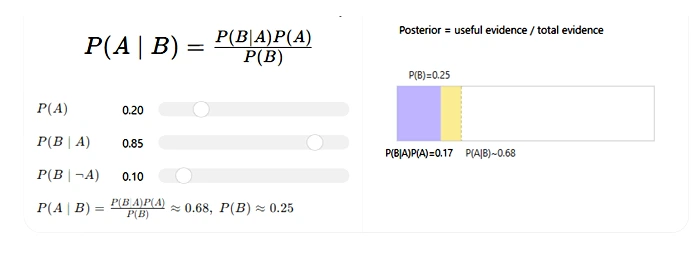
Bayes Theorem questions are particularly important because they force students to reverse conditional relationships mathematically. In many STAT 265 homework tasks, students are asked to compute posterior probabilities after observing partial evidence. These problems become increasingly difficult when multiple conditional branches are introduced simultaneously.
Another challenge is distinguishing between independence and mutual exclusivity. Many students entering STAT 265 incorrectly assume that mutually exclusive events are independent, leading to major mistakes in quizzes and midterms. Coursework often includes theoretical proofs asking students to determine whether events satisfy independence conditions under varying probability structures.
Assignments may also require students to derive probabilities recursively using conditional structures. In these problems, tree diagrams become essential because they visually organize branching probabilities and conditional outcomes. Students who develop strong diagrammatic reasoning skills often perform better in later sections involving stochastic thinking and multivariate distributions.
Theoretical probability reasoning in STAT 265 also connects strongly with future machine learning and artificial intelligence coursework. Student discussions online repeatedly note that STAT 265 provides stronger preparation for computational probability and ML pathways than basic applied statistics courses.
Random Variables and Distribution Theory in STAT 265 Assignments
Once students move beyond event-based probability, the course transitions into random variables and probability distributions. This section represents a major conceptual jump because students begin modeling uncertainty numerically rather than categorically.
STAT 265 coursework introduces both discrete and continuous random variables. Assignments frequently require students to define probability mass functions, cumulative distribution functions, and density functions. Problems are rarely limited to direct computations; instead, students are expected to derive distribution properties from first principles.
Discrete distribution problems often involve Bernoulli, Binomial, Geometric, and Poisson structures. Students may need to prove normalization properties, compute expectations manually, or derive cumulative probabilities symbolically. Continuous distribution assignments become even more calculus-intensive because integration techniques are required for density calculations.
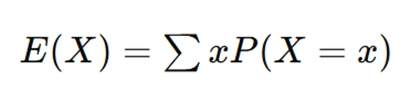
Expected value calculations form a substantial part of STAT 265 homework. Students must compute expectations, variances, and higher-order moments across various distributions. The emphasis is not merely computational; assignments regularly ask students to interpret expected values within theoretical probability models.
Continuous probability distributions also introduce integration-based reasoning into statistics assignments. Since STAT 265 has calculus corequisites involving courses such as MATH 209, 214, or 217, students are expected to manipulate integrals confidently throughout the semester.
Another major challenge is understanding the distinction between probability densities and probabilities themselves. Many students incorrectly interpret density function outputs as direct probabilities, especially when solving continuous distribution questions. STAT 265 assignments intentionally include conceptual traps involving interval probabilities, density heights, and cumulative distribution interpretations.
Students often seek help with statistical modeling homework during this portion of the course because the mathematical workload increases significantly. Problems involving transformations of random variables, piecewise densities, and parameter-dependent distributions require both calculus and probability reasoning simultaneously.
Moment Generating Functions and Inequalities in STAT 265 Homework
One of the more advanced theoretical sections in STAT 265 involves moment generating functions and probability inequalities. The course catalogue explicitly identifies moment generating functions and inequalities as core components of the curriculum.
Moment generating functions introduce students to a more abstract representation of probability distributions. Instead of analyzing distributions directly through density or mass functions, students study them through exponential expectations.
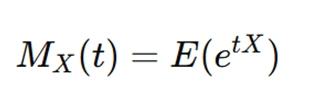
Assignments involving MGFs often require symbolic manipulation and differentiation. Students may need to derive means and variances by differentiating the generating function repeatedly. These exercises become mathematically demanding because they combine calculus techniques with probabilistic reasoning.
Probability inequalities also introduce proof-oriented thinking into coursework. Questions involving Markov’s inequality, Chebyshev’s inequality, and variance bounds frequently appear in theoretical homework sets. Rather than obtaining exact probabilities, students learn how to derive probability limits and approximations mathematically.
These topics are important because they prepare students for upper-level mathematical statistics courses. STAT 266, which follows STAT 265, expands these theoretical foundations into sampling distributions, estimation theory, and hypothesis testing. Many students who are comfortable with computational statistics struggle in this section because assignments become more proof-based than numerical. A significant portion of statistics assignment help requests associated with STAT 265 involve explaining derivation steps in MGFs and inequalities rather than simply calculating final answers.
Another recurring difficulty involves recognizing when inequalities provide loose bounds versus exact solutions. Homework problems often compare theoretical bounds against exact probabilities, requiring students to interpret the practical usefulness of approximation methods.
Continuous Distributions and Integration-Based Probability Questions
The continuous distribution component of STAT 265 transforms the course into a heavily calculus-oriented statistics subject. Problems involving normal, exponential, gamma, and uniform distributions become common throughout assignments and examinations.
Students must frequently derive normalization constants by solving definite integrals. Unlike introductory statistics courses that provide distribution formulas directly, STAT 265 assignments often require students to prove whether candidate functions satisfy density properties.
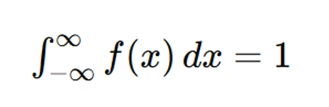
Piecewise density functions are another major source of assignment difficulty. Students may need to derive cumulative distribution functions from segmented densities and then compute interval probabilities manually. These tasks require careful integration boundaries and strong algebraic accuracy.
Transformation problems also become common during this stage of the course. Assignments may ask students to derive distributions for transformed variables such as squares, logarithms, exponentials, or linear combinations. These questions test conceptual understanding of probability structures rather than formula memorization.
Continuous distributions also connect directly with modeling applications in engineering, data science, and machine learning. Students working toward quantitative computational careers benefit significantly from mastering these mathematical foundations because later predictive modeling techniques rely heavily on probabilistic distributions and expectation theory. Discussions among students frequently describe STAT 265 as a bridge between pure mathematics and statistical inference. Many students specifically mention that the course workload intensifies once calculus-heavy probability distributions are introduced.
Multivariate Probability Structures Covered in STAT 265
The later stages of STAT 265 introduce multivariate distributions and independence structures. This portion of the course is often considered one of the most conceptually challenging because students move from single-variable probability models to joint probability systems.
Assignments involving joint distributions require students to compute marginal distributions, conditional distributions, and covariance structures simultaneously. Many questions involve interpreting dependence mathematically using joint density functions.
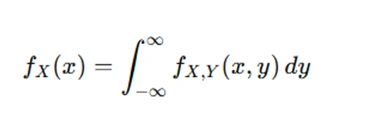
Students must also determine whether variables are independent by verifying factorization properties mathematically. Independence proofs often require symbolic derivations rather than visual intuition, making these assignments particularly difficult for students new to multivariable probability reasoning.
Joint continuous distributions frequently involve double integrals over irregular regions. This creates additional complexity because students must correctly identify integration limits while simultaneously applying probability concepts.
Covariance and correlation analysis also begin appearing during this section. . Coursework may involve proving whether variables are positively associated, negatively associated, or independent under specific probability structures. These ideas later become central in regression analysis, machine learning, and statistical inference courses. Students pursuing advanced statistics or data science studies benefit significantly from mastering this material early because multivariate probability becomes foundational in stochastic modeling, Bayesian learning, and predictive analytics.
Assignment Patterns and Mathematical Expectations in STAT 265
STAT 265 differs from many introductory statistics courses because success depends more on mathematical reasoning than software proficiency. The course catalogue structure, prerequisite design, and corequisite calculus requirements all reflect its theoretical orientation.
Assignments typically emphasize derivations, symbolic proofs, and theoretical understanding rather than spreadsheet outputs. Students are expected to show full mathematical justification throughout solutions, particularly in probability derivations and expectation problems.
Many students entering the course underestimate the level of abstraction involved. Discussions among students often describe the transition from applied statistics to mathematical probability as surprisingly demanding.
The course also serves as an important preparation pathway for upper-level statistics and machine learning subjects. Students pursuing computational fields regularly identify STAT 265 as one of the more useful theoretical foundations for advanced quantitative coursework.
Because assignments combine calculus, algebra, probability theory, and mathematical proofs simultaneously, many students seek statistics homework help to understand derivation methods and probability modeling techniques in greater depth.